Architecture
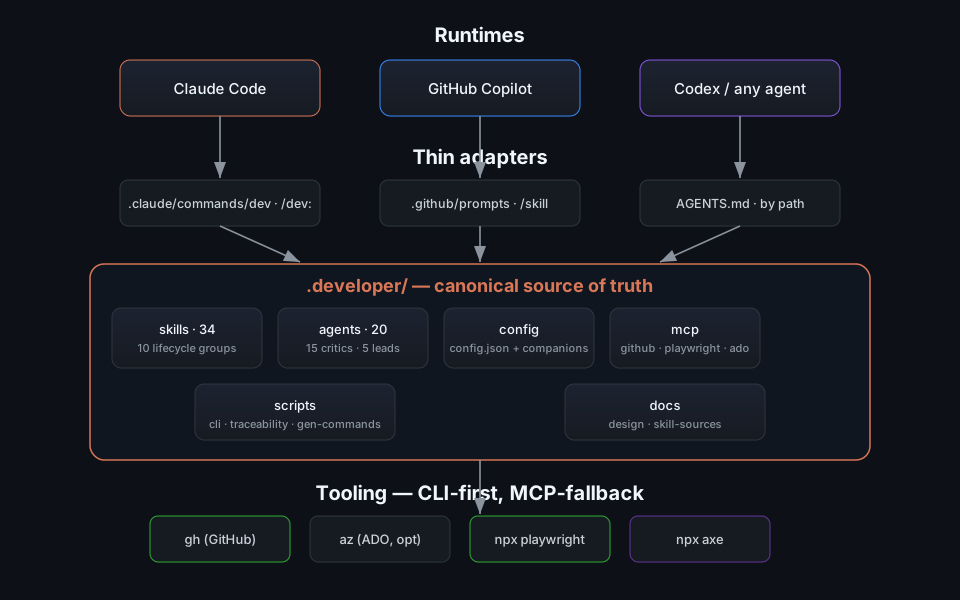
The .developer/ tree is the single source of truth. Everything else — runtime adapters, CI, and
docs — points back to it.
Layered overview
Each runtime invokes skills through a thin, generated adapter. Adapters carry no logic; they resolve
to a canonical SKILL.md. Skills then drive external systems through a CLI-first, MCP-fallback
tooling layer.
Closed-loop lifecycle (EASE-MAS)
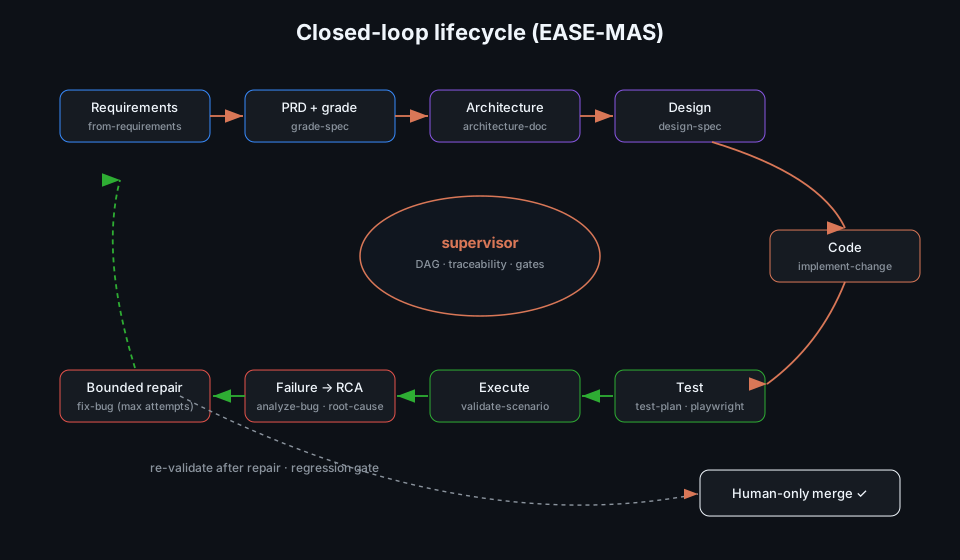
A supervisor plans the work as a DAG and delegates each stage to the owning skill or lead. Failures
feed root-cause analysis and a bounded repair loop; every repair is re-validated against a
regression gate before a human merges.
Traceability graph
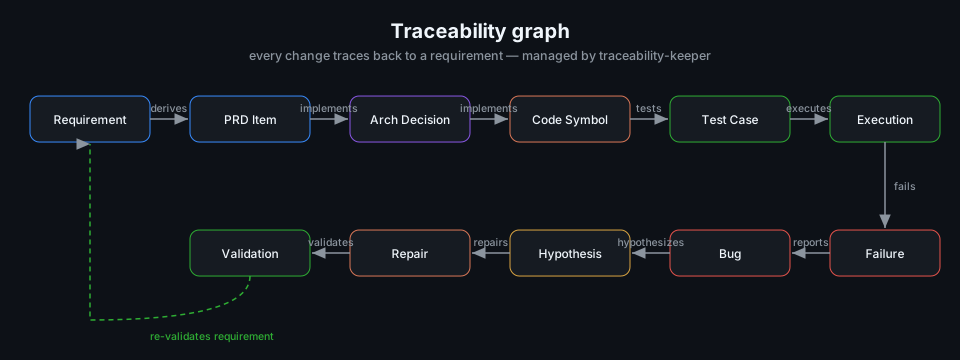
The traceability-keeper maintains a graph so every artifact links back to a requirement and forward
to its tests and status. It is written by .developer/scripts/traceability.js and is queryable for
coverage and change-impact.
Code-review critic pipeline
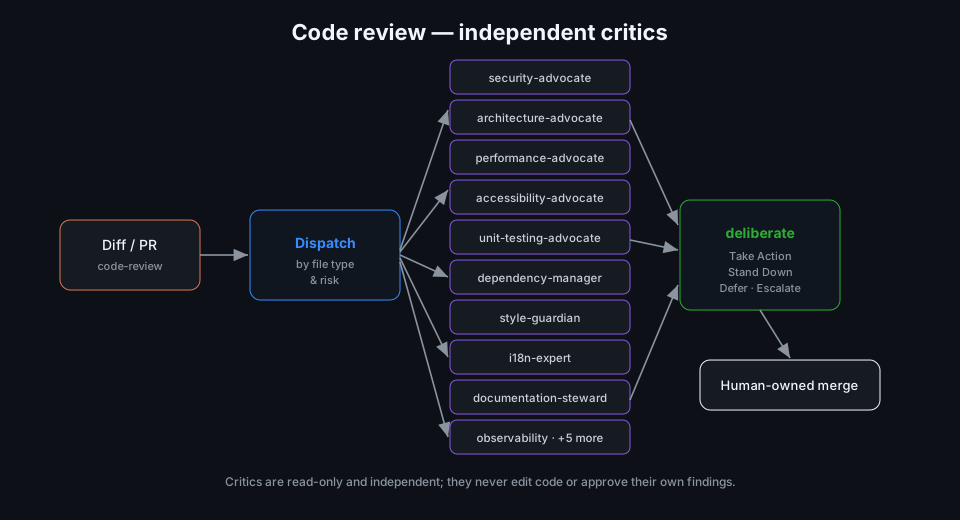
The code-review skill dispatches a diff to the relevant specialist critics by file type and risk.
Critics are independent and read-only; their findings are weighed by deliberate into a single
verdict.
Design principles
- Ask, don’t hallucinate — skills load config/profile first and ask when intent is unclear.
- Human-owned merge — autonomy ladder L0–L4; autonomous CI is disabled by default, draft PRs only.
- Open-source only — no vendor-internal content; generic equivalents throughout.
- Minimal by default — smallest correct change; no gold-plating.